Architectural Scale Models in Digital Age – Design and Representation

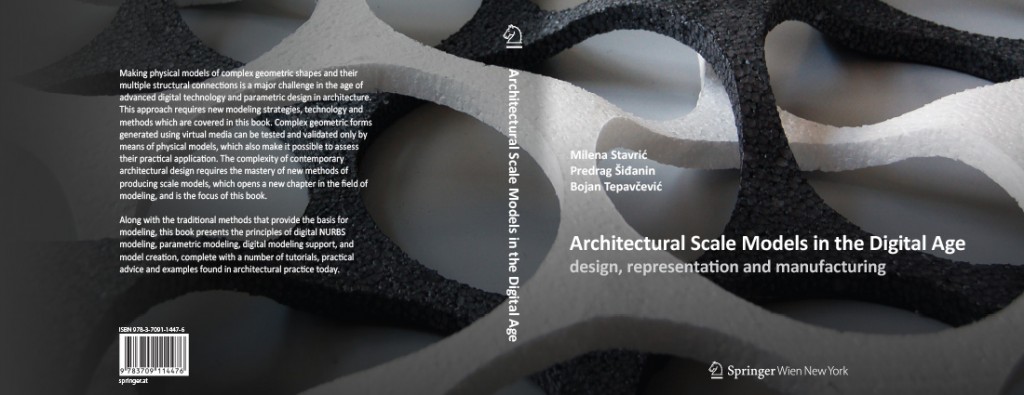
Stavrić M., Šiđanin P., Tepavčević B., , Springer Verlag, 2013.


About the book: A major challenge in the age of advanced digital technology and parametric design in architecture is making physical models of complex geometric shapes and their multiple structural connections. This approach requires new modeling strategies, technology and methods which are covered in this book. Complex geometric forms generated using virtual media can be tested and validated only by means of physical models, and so can their practical application be controlled. The complexity of contemporary architectural design bids the mastery of new methods of producing scale models, which opens a new chapter in the field of modeling, and which is the focus of this book. Along with the traditional methods forming a basis for modeling, this book presents the principles of digital NURBS modeling, parametric modeling, digital support to modeling, and model manufacturing, complete with a number of tutorials, practical advice and examples found in architectural practice today.


Online version of article:

Architectural Scale Models in the Digital Age
 

Visualization of the Centre of Projection Geometrical Locus in a Single Image

Stojaković V., Popov S., Tepavčević B. 2013.DOI 10.1111/cgf.12254 Computer Graphics Forum Vol. 33. Issue 1. pp. 52‐63.


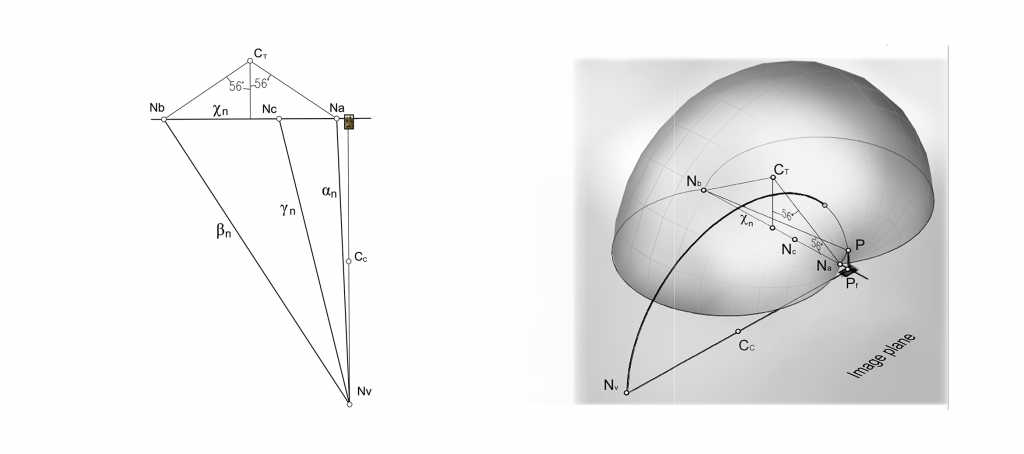
Abstract: Single view reconstruction (SVR) is an important approach for 3D shape recovery since many non-existing buildings and scenes are captured in a single image. Historical photographs are often the most precise source for virtual reconstruction of a damaged cultural heritage. In semi-automated techniques, that are mainly used under practical situations, the user is the one who recognizes and selects constraints to be used. Hence, the veridicality and the accuracy of the final model partially rely on man-based decisions. We noticed that users, especially non-expert users such as cultural heritage professionals, usually do not fully understand the SVR process, which is why they have trouble in decision making while modelling. That often fundamentally affects the quality of the final 3D models. Considering the importance of human performance in SVR approaches, in this paper we offer a solution that can be used to reduce the amount of user errors. Specifically, we address the problem of locating the centre of projection (CP). We introduce a tool set for 3D visualization of the CP’s geometrical loci that provides the user with a clear idea of how the CP’s location is determined. Thanks to this type of visualization, the user becomes aware of the following: (1) the constraint relevant for CP location, (2) the image suitable for SVR, (3) more constraints for CP location required, (4) which constraints should be used for the best match, (5) will additional constraints create a useful redundancy. In order to test our approach and the assumptions it relies on, we compared the amount of user made errors in the standard approaches with the one in which additional visualization is provided.

Online version of article:

Visualization of the Centre of Projection Geometrical Locus in a Single Image

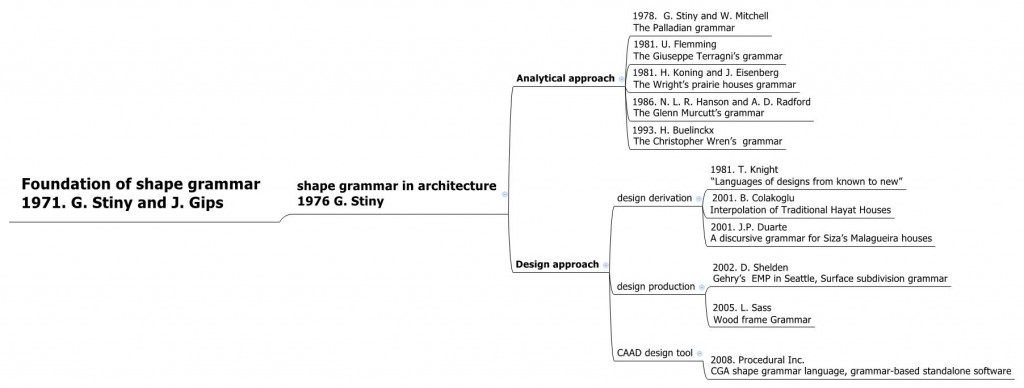
Shape grammar in contemporary architectural theory and design

Tepavčević B., Stojaković V., 2012. , Facta Universitatis Series: Architecture and Civil Engineering Vol. 10, No 2, 2012,   pp. 169‐ 178.


Abstract: In the past decade, digital technologies had a great impact on contemporary architectural practice, design and theory. CAD/CAM technologies opened up new opportunities by allowing design and production of complex geometric shapes. One of the first applications of computational process in architecture was based on using shape grammars, a rule-based expert systems in artificial intelligence generating geometric shapes. Early applications of shape grammars in art and architecture started shortly after its invention during the 70ies and 80ies of the XX century, however, their potential as a generative design tool still has not been fully exploited in practice. Despite their popularity in academic circles, shape grammars have not found a widespread place/usage in computer aided architectural design. Role of shape grammar as a generative design and analysis tool and their influence on contemporary architectural design and theory are examined in this paper. Also, new and ongoing issues concerning shape grammars are discussed in order to indicate further directions of their usage.


Online version of article:

Shape grammar in contemporary architectural theory and design


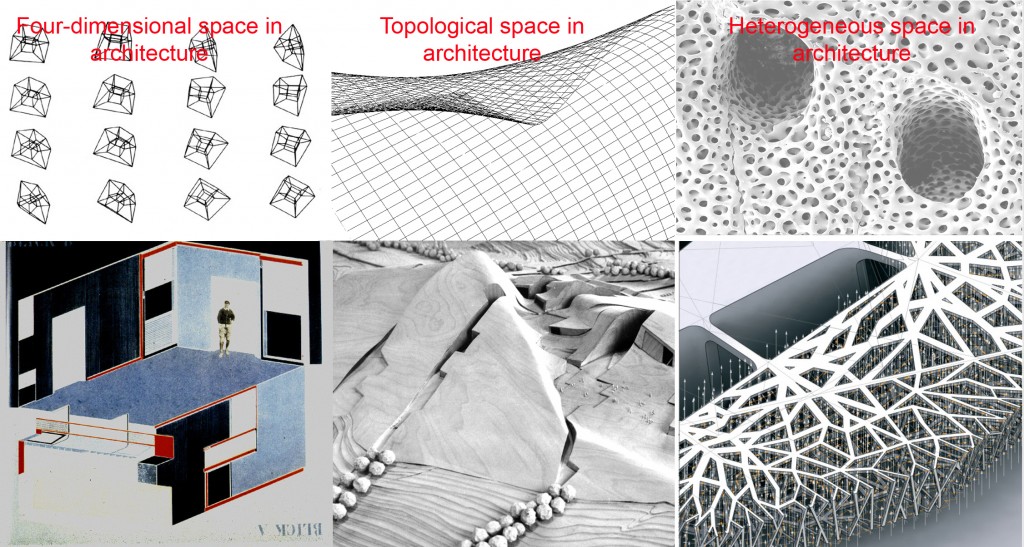
Mathematical concepts of space in contemporary architecture

Tepavčević, V. Stojaković, 2012, Nexus Ph.D. Day.Relationships between Architecture and Mathematics, Ed. Michela Rossi, McGraw Hill Education (Italy), str. 81‐87, ISBN978‐88‐386‐7333‐7.


Abstract: The notion of space has a crucial role in the theory of architecture. Although the dominant concept of space has, for architects, been associated with the three-dimensional Euclidean space for centuries, the development of the contemporary architecture has been marked with some other geometric concepts as well. In this research the influence of geometric concepts of space on the theory of design and representation in architecture are examined. The paper systematically describes, analyzes and evaluates the claims of individual architects who applied concepts of space different from the three-dimensional Euclidean in their design.

Online version of article:

Mathematical concepts of space in contemporary architecture

Single Image Ambiguity and Adjustment of Cultural Heritage Modeling Approach

Stojaković V. and Tepavčević B., 2011. Education and Research in Computer Aided Architectural Design  in Europe ‐ eCAADe  Ljubljana, Slovenia, pp. 99‐106.

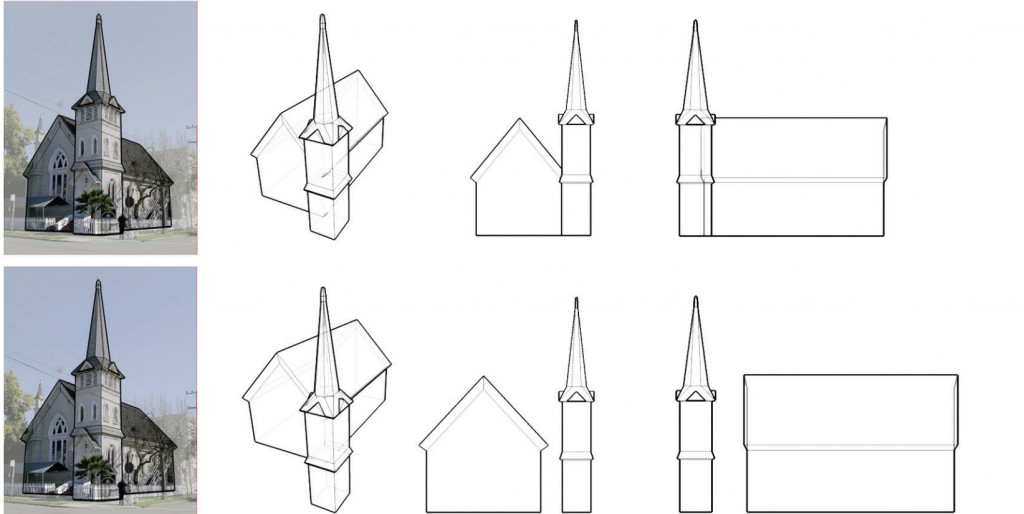
Abstract: The objective of this research is to point out the deficiency of the modeling from a single image and give suggestion for the improvement. In the domain of cultural heritage visualization, single image modeling is mainly used to recover the scene shown in the historical photographs. In this paper, some common ambiguities in the area of the historical architectural environments are highlighted. In most approaches user is the one to introduce and choose constraints, and therefore he must have control over the ambiguity problems. We propose suggestions about how to adjust the single-image-based modeling in order to minimize chance for irregular 3D shapes to emerge due to ambiguity. Simple examples are used to illustrate how ambiguity of a single image can affect the models veridicality, which are the common mistakes that inexperienced user can make and how and when they can be corrected.

Online version of article:

Single Image Ambiguity and Adjustment of Cultural Heritage Modeling Approach


Image‐based modeling approach in creating 3D morphogenetic reconstruction of Liberty Square in Novi Sad

Stojaković V. and Tepavčević B., 2011. Journal of Cultural Heritage. Vol12, Issue 1, pp.105‐110.


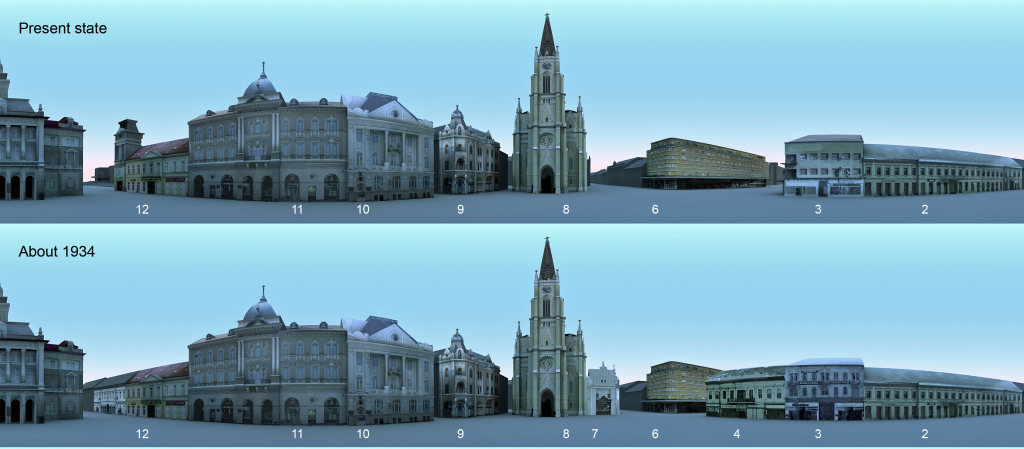
Abstract: In this paper, various methods were combined to create a morphogenetic reconstruction of Liberty Square in Novi Sad using photo documentation as input data. Three-dimensional morphogenetic reconstruction of the city square provides the most comprehensive way of tracking changes in its structure through relative time periods. Transformations of Liberty Square are followed from the year 1885 to present day. Through that period, Liberty Square has undergone dramatic changes in its shape and structure. Previous appearances of the square are known from preserved historical photographs and mapping documentation. Old photographs and new digitally captured images were combined through different modeling approaches in attempt to find the most efficient way to reconstruct characteristic development phases of the square. Existing objects are generated through the use of different styles of photogrammetric modeling; however, non-existing or modified objects are generated by application of historical photo restitution combined with 3D modeling. Adequate simultaneous usage of all methods provides optimal results.

Online version of article:

Image‐based modeling approach in creating 3D morphogenetic reconstruction of Liberty Square in Novi Sad

Virtual Reconstruction of Kljajicevo Chapel

V. Stojaković, R. Štulić, 2010. Virtual Reconstruction of Kljajicevo Chapel, Journal for Geometry and Graphic, Vol. 14, No 10, pp. 81-91

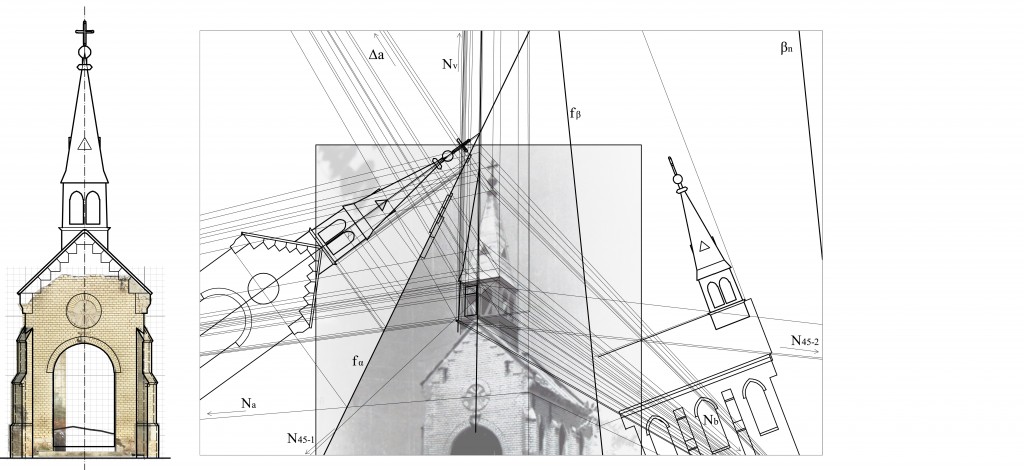
Abstract: Virtual reconstruction, as a three dimensional realistic representation, has many advantages in the cultural heritage data distribution and storage, especially in the case of devastated architectural objects. A procedure of virtual reconstructing of St Wendelin chapel in Kljajicevo is presented in this paper as a case study. Existing remains have been recorded using terrestrial photogrammetry. Spatial information and dimension of collapsed parts have been exported from old photographs by using perspective projection restitution methods. These two type of data are combined and used as a platform for 3D virtual reconstruction of object. Virtual reconstruction makes spatial data complete and ready for further research or data distribution.

Online version of article: Virtual Reconstruction of Kljajicevo Chapel

Optimal Methods for 3D Modeling of Devastated Architectural Objects

V. Stojaković, B. Tepavčević, 2009. International Archives of Photogrammetry, Remote Sensing and Spatial Information Sciences, Volume XXXVIII-5/W1, ISPRS, Trento, Italy, pp. 1-6.


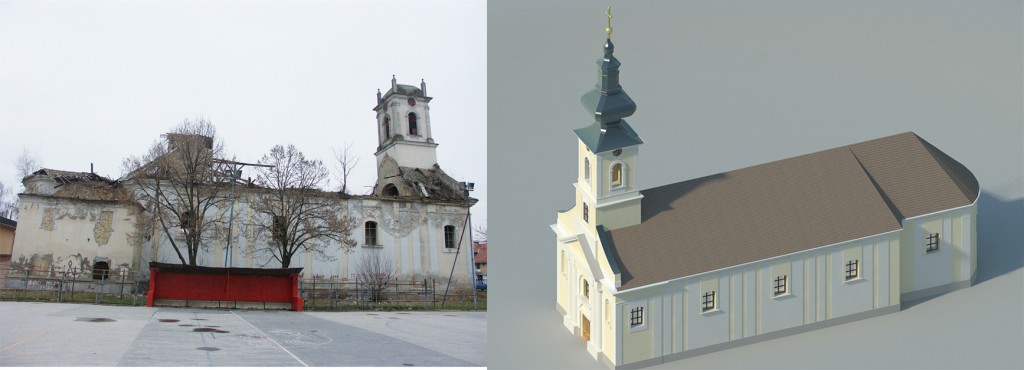
Abstract: In this research we define optimal methods for 3D representation of devastated architectural objects. Recording devastated objects consists of three phases: recording existing remains, recording collapsed parts of objects and combining these results into a complete model.

Optimal method for recording existing remains depends on the specific site conditions. Criteria for choosing optimal method can be divided into project criteria, economic criteria and object criteria. Project criteria relays on required type of representation which includes data quantity, quality and complexity. Economic criteria searches for method with least time and financial demands. Object criteria analyze if the defined type of objects is suitable for specific method. After complete analysis of numerous devastated sacral objects, it is determined that among manual measuring, photogrammetry and laser scanning, the terrestrial photogrammetry is the best method.

For recording of former object appearance, old photograph restitution is obviously the optimal method.

Combining photo restitution, terrestrial photogrammetry and modeling, virtual reconstructions of partly collapsed objects are created. Virtual reconstruction of devastated objects is a 3D model representing object as it looked before any damage.

Danube area of Vojvodina was entirely researched as case study . All catholic churches and chapels built in Vojvodina in 18th, 19th and first half of 20st century were recorded. For devastated objects virtual reconstructions were made. These models relay on 3D photogrammetry models of present remains combined with object volume data on old photographs or photographs of hardly approachable parts. Several typical object representatives are presented in this paper.

Online version of article: Optimal Methods for 3D Modeling of Devastated Architectural Objects